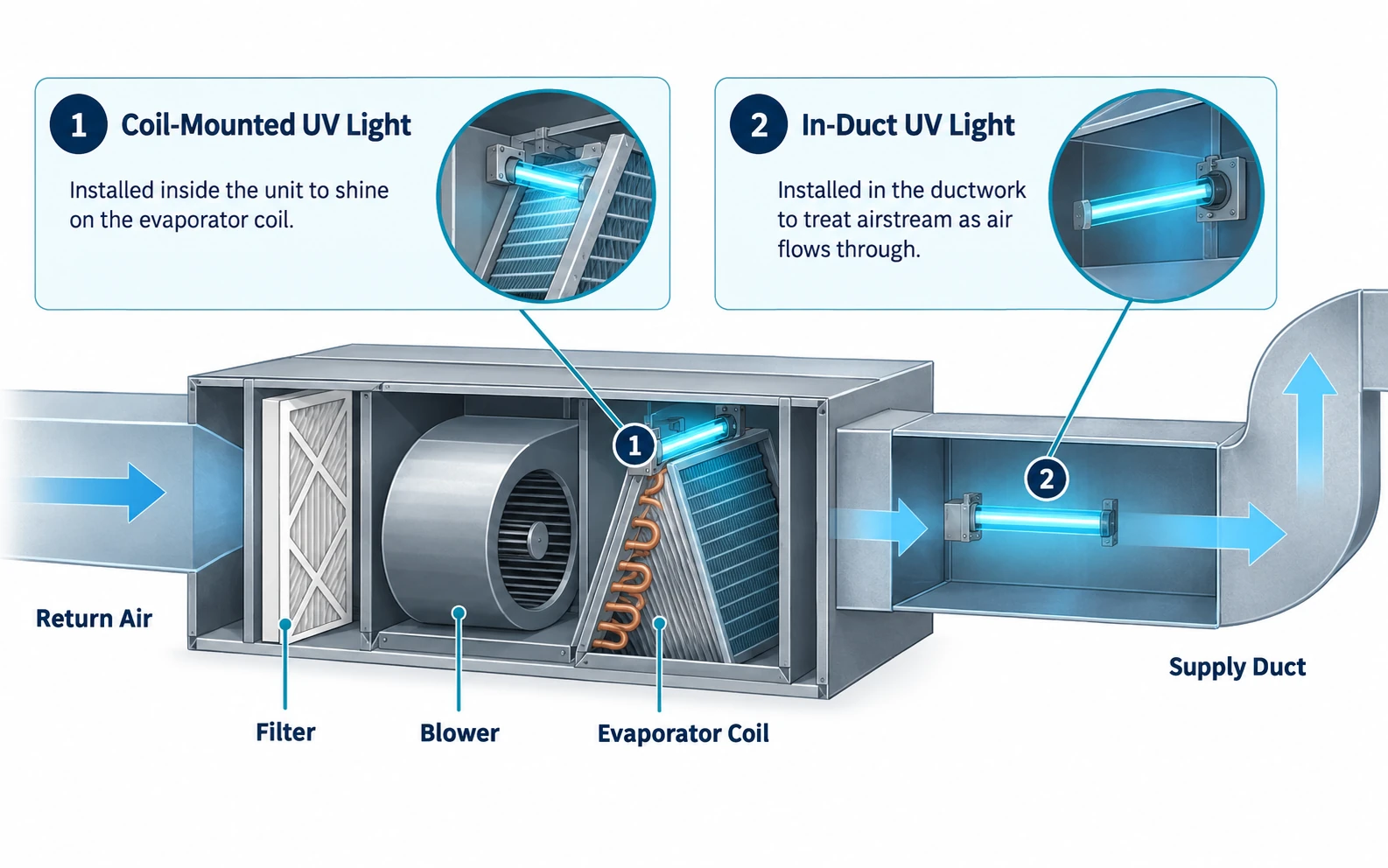
Two configurations, two different objectives
A coil lamp is positioned so its energy reaches the intended surface. Shadows, the shape of the coil and nearby components influence coverage. In-duct systems must account for the short time air spends in the treatment zone, along with airflow and the output actually reaching the target.
Ask an installer to name the treatment objective before discussing lamp count or wattage. Electrical wattage describes energy consumption; it does not, by itself, describe delivered germicidal dose.
Choose and compare a system
Move from understanding the technology to comparing a documented design. Start with the buying guide, then resolve the sizing, features and service questions for your application.
HVAC UV Light Buying Guide: What to Look For Before You Buy
Compare HVAC UV applications, lamp count, length, electrical supply, ozone documentation, service access and lifetime costs before selecting a system.
Read the guideSingle-Lamp vs Dual-Lamp HVAC UV Systems
Compare single- and dual-lamp HVAC UV layouts by coil coverage, cabinet fit, installation work, power consumption and replacement requirements.
Read the guide24V vs 120V HVAC UV Lights
Understand HVAC UV power sources, transformer capacity, controllers, hardwired and plug-in arrangements, compatibility and professional installation.
Read the guideHow to Size an HVAC UV Light System
Size HVAC UV around coil dimensions, lamp length, target distance, intensity, cabinet geometry and airflow—not a universal watts-per-ton rule.
Read the guideHVAC UV Light Replacement Bulb Costs and Ownership Cost
Plan HVAC UV replacement lamps, controller repairs, electricity and service costs with a transparent ownership worksheet instead of invented price averages.
Read the guideExplore the HVAC guides
How UV Works
Do UV Lights Work?
Air Handler
Evaporator Coil
Air Conditioner
Placement
Installation
Best Systems
Maintenance
Match the guide to your equipment
Benefits and limits to keep in view
UV can be considered as a supplement where control of microbial growth on accessible, irradiated surfaces is the objective. It does not physically remove dust, existing deposits or mold fragments. It also does not correct condensate drainage or building moisture problems.
For indoor air quality, begin with the pollutant source, ventilation where appropriate and compatible filtration. Evidence about a particular UV installation should match its operating conditions. A laboratory result for a microorganism does not establish an illness-prevention benefit in an occupied home.
Plan installation and ownership together
A suitable location needs clearance for both the lamp and its future removal. A professional should confirm electrical supply, shielding, cabinet integrity and compatibility with nearby materials. See the installation guide for the assessment sequence.
Compare an itemized ownership cost rather than only a purchase price. Include the specified replacement lamp, service access and electrical work. The buying guide provides criteria for comparing proposals without relying on unsupported rankings.
When a UV system may make sense
- The intended target is specific and reachable by the proposed lamp configuration.
- Moisture, cleanliness and drainage have already been assessed.
- The equipment is compatible, shielded and supported by documented operating instructions.
- You can obtain replacement parts and follow the maintenance schedule.
If the main concern is visible growth or recurring odor, investigate the cause before purchasing an accessory. Read UV light and HVAC mold and the maintenance guide for the limits and ongoing responsibilities.
Questions People Ask Next
Does an HVAC UV light clean the air?
Some systems are designed for airstream treatment, but a coil lamp has a different primary objective. Ask for performance information at the intended airflow, installation geometry and operating conditions. UV does not capture airborne particles. A proposal should explain its relationship to filtration and should not promise a universal improvement in indoor air quality.
Can it be installed in any HVAC system?
Compatibility must be checked for the particular equipment. Cabinet space, access, materials, wiring and the location of the intended target all matter. An installation that fits physically may still be unsuitable for effective coverage or safe servicing. Ask the HVAC manufacturer or a qualified installer before modifying the enclosure.
Does the light stay on all the time?
Operating schedules are product-specific. Some surface-treatment installations operate continuously; other products use controls tied to system operation. Follow the specified control strategy instead of assuming that all lamps should cycle with the blower. Changing the schedule can change exposure and may affect the manufacturer’s intended performance.
How often do I replace the lamp?
Use the replacement interval for the exact lamp and controller. Visible glow is not a measurement of germicidal performance. Keep the model number, installation date and recommended service date together, and confirm the correct replacement before the original lamp becomes unavailable. Cleaning and inspection are separate maintenance tasks.
Is a UV lamp an alternative to mold remediation?
No. Address moisture and contaminated materials directly. UV only reaches exposed treatment areas and does not remove growth or debris. If contamination extends beyond the equipment or keeps recurring, seek an assessment of the moisture source and cleaning needs. A new lamp should not be used to postpone that work.
Sources & further reading
Primary references for the principles discussed. Manufacturer instructions take precedence for a specific system; no independent technical reviewer is claimed.